Connected living is now mainstream. In the past year alone, around one in five households added new smart devices, and the typical home now runs well over a dozen connected products. As adoption grows, expectations are rising: systems must be dependable day‑to‑day, resilient during outages, and straightforward to expand. This article examines three forces reshaping residential security in 2025—Wi‑Fi’s rise, NFC‑based access control, and hybrid system design—and outlines how to specify solutions that are reliable, future‑ready and cost‑effective.
For homeowners, estate managers, and developers, the brief is changing from “add a camera” to “deliver a cohesive, secure experience.” Doing so requires careful network design, layered access policies, and a roadmap that balances immediate needs with long‑term flexibility.
Trend 1: The network shift—Wi‑Fi’s rise and why hybrids win
IP and Wi‑Fi devices continue to surge because they are easy to deploy, support remote monitoring, and deliver rich, real‑time alerts. Today’s Wi‑Fi cameras provide high‑resolution video, intelligent motion analytics, and cloud or local recording options. Control panels and intercoms increasingly connect over Ethernet or Wi‑Fi, enabling secure remote access for homeowners and support teams.
At the same time, low‑power mesh protocols—such as Zigbee, Z‑Wave, and Thread—remain the right tool for battery‑powered devices. They are efficient, extend coverage through mesh routing, and keep sensors responsive without frequent battery changes. The lesson for 2025 is clear: the most robust systems are hybrids that place each workload on the right transport.
Best‑practice design principles:
- Use Wi‑Fi/Ethernet for high‑bandwidth endpoints. Security cameras, video doorbells, intercoms, and control panels benefit from the throughput and backhaul options of IP networks. Where possible, run Ethernet to fixed cameras and use PoE for both data and power.
- Use low‑power mesh for sensors and locks. Door/window sensors, motion detectors, leak sensors, and smart locks excel on Zigbee/Thread/Z‑Wave. They deliver long battery life and resilient coverage, especially in larger or denser properties.
- Keep critical automations local. Intrusion alarms, entry/exit delays, arming states, and essential lighting scenes should execute on a local hub or controller, not rely on the public internet. This ensures the system continues to function during ISP outages.
- Engineer power resilience. Provide an uninterruptible power supply (UPS) for the router, switching, access points, and any local controllers or NVRs. For motorised locks, ensure emergency power options are in place. Test expected runtime so the system remains operational through typical interruptions.
- Provide local fallback access. Maintain keypads, mechanical overrides, or secure physical keys so occupants can enter and disarm even if phones are flat or connectivity is down.
- Treat Wi‑Fi as infrastructure. Plan access point locations with a site survey, use wired backhaul where feasible, and adopt a channel plan optimised for dense environments. This stabilises video streams and reduces latency for time‑critical events.
A hybrid strategy eliminates bottlenecks, reduces single points of failure, and sets a clean path for future additions—whether that is more cameras, new sensors, or energy‑saving automations.
Trend 2: Affordability—staged packages that scale with life
Cost is still the most cited barrier to adoption. The answer is not to strip capability but to design staged packages that deliver value from day one and expand over time without rework.
A practical phasing model:
- Starter security: Entry door/window sensors, a smart lock on the primary entrance, and a video doorbell. This combination provides essential deterrence, instant visibility at the door, and audit trails of entry.
- Growth features: Add exterior and interior cameras at high‑value points, plus lighting scenes linked to occupancy and time of day. Simple additions like “Welcome Home” and “Goodnight” routines heighten perceived safety and convenience.
- Advanced intelligence: Presence detection (using occupancy sensors and device presence), zoned intrusion logic, and energy automations that adapt heating, cooling, and blinds when rooms are unoccupied. Leak sensors and shut‑off valves add risk mitigation for insurance‑critical events.
Focus on features that produce daily benefits as well as security:
- Activity zones and smart alerts. By watching only the driveway or garden gate, you reduce false notifications and improve response. Modern analytics distinguish people, vehicles, and parcels to prioritise what matters.
- Schedules and scenes. Exterior lights at dusk, hallway lights on entry, and whole‑home “Away” modes reduce both risk and energy use. Tie lighting and shading to sunrise/sunset for set‑and‑forget reliability.
- Routines that save energy. Lower heating in unoccupied rooms, suspend towel rail or AV standby power when the home is empty, and pre‑warm or pre‑cool only when returning. Small efficiencies add up, helping systems pay back faster.
To keep options open, specify “expansion‑ready” infrastructure even in a starter phase:
- Run Cat6 to door positions, eaves, and likely camera mounts.
- Reserve power and conduits at access point locations.
- Choose platforms that support local control and have clear pathways to upcoming standards so you can integrate rather than replace later.
Trend 3: Contactless access—NFC tap‑to‑authenticate goes mainstream
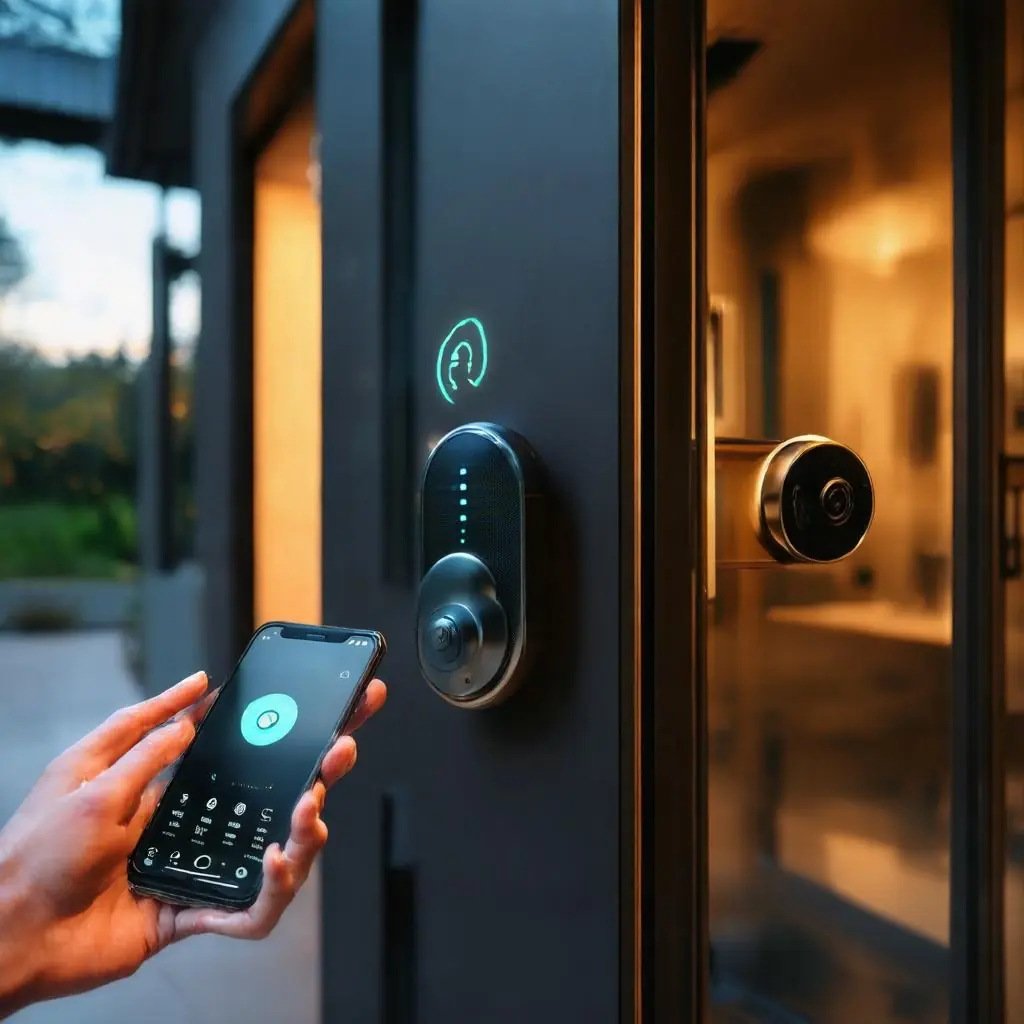
Near Field Communication (NFC) has moved beyond payments into the home. Tapping a phone, watch, or fob to a reader can unlock doors, disarm the alarm in a specific entry sequence, trigger a lighting scene, or adjust a thermostat. For families, guests, and trades, NFC offers speed, hygiene, and accessibility—no need to open an app or find a tiny keypad in low light.
Recommended approaches:
- Use device wallets for secure credentials. Modern phones can store encrypted access passes with hardware‑level protections. For users without smartphones, supply NFC cards or fobs with defined permissions.
- Layer security intelligently. Combine NFC with presence detection (e.g., only accept a tap if a known device is at home) or require a short PIN during certain hours for two‑factor verification. High‑risk areas (plant rooms, garages, home offices) can enforce stronger rules than general entry doors.
- Issue temporary digital keys. Create time‑boxed credentials for guests, cleaners, or contractors—valid on certain days or hours, and revocable instantly. Provide an audit trail of access events for accountability.
- Plan for exceptions. Maintain mechanical overrides and clearly signpost fallbacks for low‑battery phones or lost fobs. Ensure doors fail secure in compliance with safety and egress regulations appropriate to the property type.
With thoughtful policy design, NFC can simplify daily routines while strengthening security—reducing code sharing and the risks of lost keys.
Looking ahead: interoperability, certification, and implementation checklist
Interoperability standards are maturing. Emerging frameworks aim to make cross‑brand compatibility more predictable and improve battery performance on low‑power devices. When specifying, prioritise products with:
- Strong update policies and track records for timely security patches.
- Certification to relevant standards and participation in recognised ecosystems that support local control.
- Clear data practices and options to keep sensitive functions on‑premises.
A disciplined implementation process is what ultimately turns good products into great systems. Build your scope and commissioning plan around the following essentials:
Implementation checklist:
- RF and network survey. Map Wi‑Fi coverage and interference, check signal‑to‑noise at planned camera locations, and verify mesh viability for sensors and locks.
- Segmented Wi‑Fi/VLAN for IoT. Isolate smart devices from personal and work networks, enforce strong credentials, and restrict east‑west traffic to reduce lateral risk.
- Privacy‑by‑design settings. Default to least privilege; restrict who can view recordings, mask private areas in camera frames, set appropriate retention, and enable multi‑factor authentication for admin access. Align with local data protection obligations.
- Compliance with door hardware and local regulations. Ensure smart locks complement certified mechanical components and that life‑safety and egress requirements are met for the property type. Follow manufacturer installation guidelines to maintain warranties.
- Routine outage testing. Simulate ISP failures and power cuts to confirm that alarms, access, and essential automations continue to work locally. Verify UPS runtime and recovery behaviour on reconnection.
Additional good practice:
- Document device names, locations, and network assignments; maintain backup configurations.
- Standardise firmware levels and schedule maintenance windows for updates.
- Use secure remote support methods (e.g., VPN) rather than exposing devices to the internet.
- Provide user training and an escalation path for support, especially around access control policies and privacy settings.
By aligning the transport to the task, phasing features around everyday value, and embracing contactless access with layered policies, homeowners can achieve a system that is both sophisticated and simple to live with. The result is seamless security that fits real routines and real budgets.