Smart smoke and carbon monoxide (CO) alarms have matured into dependable life‑safety devices that also enhance connected living. Beyond detecting danger, modern models deliver remote smartphone alerts when you are away, fewer nuisance activations thanks to improved sensors and algorithms, self‑testing routines with clear diagnostics, intelligible voice/location warnings, and end‑of‑life notifications so you know when to replace a unit.
For homeowners, second homes and holiday lets, landlords, and small commercial premises, these features translate into faster awareness, clearer action, and better evidence for audits and compliance. Crucially, the best smart alarms continue to function as certified, stand‑alone safety devices even if Wi‑Fi or cloud services are unavailable. Think of the app features as an extra layer atop a robust, independently certified core.
When comparing products in 2025, prioritise the following:
- Independent safety certification: For the UK and Europe, look for EN 14604 (smoke) and EN 50291 (CO). In other regions, seek the equivalent local/UL standards.
- Whole‑property interconnection: Alarms should trigger together, either via wired interlink or secure wireless mesh. This ensures occupants anywhere hear the alert.
- Fast smartphone alerts: Notifications should reach you and trusted contacts promptly, with clear event types (smoke, CO, test, low battery, end‑of‑life).
- Local resilience: Units must sound locally and interconnect even if Wi‑Fi, power, or cloud services are down.
- Hush controls: Temporary silencing via app or on‑device button to deal with cooking fumes without disabling protection.
- Voice and location announcements: Clear, human‑readable prompts that specify the room and hazard to reduce confusion.
- 10‑year sealed batteries (for battery models): Minimises maintenance and false chirps; for mains models, ensure backup power.
- Automatic self‑tests: Regular sensor, power, and sounder checks, with unambiguous diagnostics in the app and on the device.
- Audit and access: Multi‑user support, event logs, and role‑based access for households, landlords, and facilities managers.
HYDE AV specifies and installs alarms that meet these criteria and can be integrated responsibly with wider smart‑home and building systems across London, Essex, Suffolk, and neighbouring areas. Where appropriate, we design hybrid deployments that combine standard interlinked alarms with a small number of smart units acting as notification hubs, preserving compliance while adding remote visibility.
Integration that supports—never replaces—life safety
Smart alarms can enhance a property’s response to an incident when integrated carefully with other systems. The guiding principle is simple: certified alarm functions must remain independent. Automations may support evacuation and situational awareness, but they should not be required for detection or alerting.
Practical integrations include:
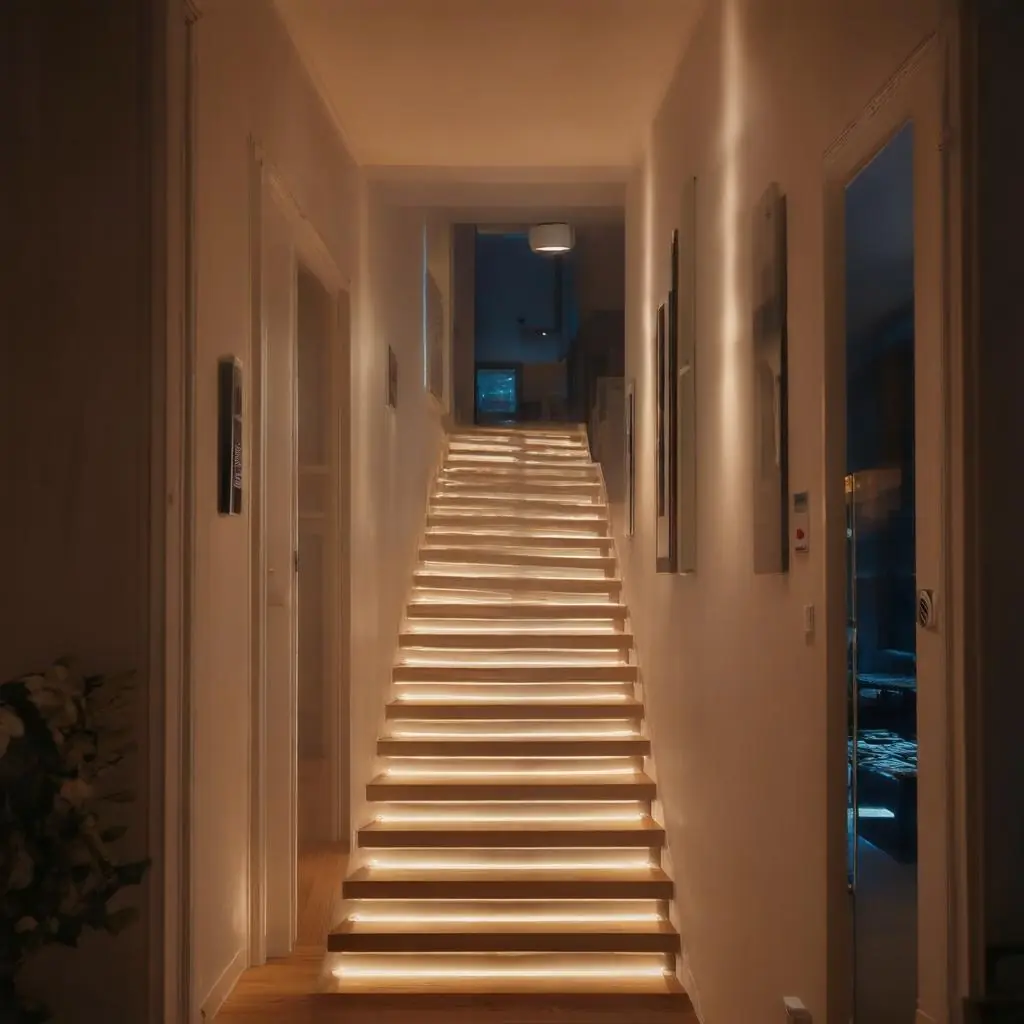
- Lighting for safe egress: Link alarms to smart lighting to illuminate escape routes (hallways, landings, external exits) when an alarm sounds. Use battery‑backed or emergency‑rated luminaires where appropriate.
- HVAC and extraction: Pause mechanical ventilation, MVHR, or kitchen extraction to reduce smoke spread; resume automatically when the event clears.
- Cameras for verification: Trigger recording on internal or external cameras to capture context. Do not rely on cameras to confirm a fire—treat the alarm as authoritative.
- Notifications to trusted contacts: Send alerts to family members, property managers, or a landlord—useful for second homes, holiday lets, and small businesses.
- Security and access control: In commercial contexts, integrate with access systems to unlock emergency exits or display evacuation messages on digital signage.
Plan for ecosystem realities:
- Interlinking across generations: Many existing homes have wired interconnect (typically three‑wire). Verify whether new alarms can join that network or if a relay/interface module is required.
- Gateway and relay options: Some brands provide dry‑contact relays or radio modules that connect to control systems (e.g., Crestron). HYDE AV often uses such interfaces to convey alarm states without touching the certified detection logic.
- Phased upgrades: During replacements, ensure new and old alarms can coexist safely. If not, isolate by circuit or deploy radio bases to bridge interconnection until a whole‑property refresh is complete.
- Offline behaviour: Confirm that integrations fail safely. For example, lighting scenes should still trigger from a hardwired relay even if the home network is down.
A professional design review can map out zones, interlink paths, and automation boundaries so you gain the benefits of a smart ecosystem without compromising compliance.
Installation and compliance: getting coverage right
Life‑safety systems are governed by local regulations and standards. In the UK, domestic installations typically reference BS 5839‑6 (fire detection and fire alarm systems for domestic premises) alongside building regulations and local authority requirements. Landlords and specific property types (e.g., HMOs and holiday lets) may face additional obligations. Treat the following as guidance and verify with your local authority or fire service.
Coverage and device selection:
- Smoke alarms on each storey and in circulation spaces such as hallways and landings. Consider living rooms where occupants spend significant time.
- Heat alarms—not smoke—in kitchens and garages to avoid steam and grease‑related nuisance alarms, while still providing early warning of high heat.
- CO alarms in any room with a fuel‑burning appliance (boiler, fire, stove) and in rooms with flues passing through.
- Interlinked alarms so activation in one area is heard throughout the property.
- Ceiling placement is generally best; follow manufacturer spacing rules and avoid corners, dead air pockets, and locations prone to steam, grease, or high airflow.
Powering options:
- Hardwired with backup: Ideal for new builds and renovations. Provides robust power and continuous interlink, with battery backup for resilience.
- Sealed long‑life battery units: Suitable where wiring is impractical, especially in retrofits or rentals. Choose 10‑year sealed cells to reduce maintenance.
Mixed environments:
- For properties with existing standard alarms, consider adding a limited number of smart units strategically (e.g., main circulation spaces) to provide remote alerts while retaining full interlinked coverage.
- In HMOs and higher‑risk dwellings, the required system grade and category may mandate hardwired interlinking and more extensive coverage. Seek professional advice to align with BS 5839‑6 and local licensing conditions.
Documentation and testing:
- Keep a simple log of installations, tests, and maintenance—particularly important for landlords and small businesses that need auditable records.
- Use the app’s health reports alongside manual tests to demonstrate ongoing compliance.
HYDE AV designs, installs, and commissions systems to current standards, coordinating with building control, landlords, and managing agents. We also plan cabling and device locations in tandem with broader AV and networking works to ensure a clean, compliant fit‑out.
Privacy, security, maintenance, and lifecycle
Smart does not have to mean intrusive. Before committing to a platform, review data, security, and operational resilience:
- Data minimisation: Understand what the app collects—location, device status, air‑quality metrics—and whether you can opt out of analytics or third‑party sharing.
- Security and access: Confirm end‑to‑end encryption, multi‑factor authentication, and granular user roles so family members, tenants, or staff can receive alerts without full administrative control.
- Local independence: Essential alarm functions must not depend on cloud services. Verify that detection, sounders, and interlinking operate offline.
- Multi‑user and multi‑property support: Useful for landlords and owners of second homes or portfolios.
Maintenance keeps systems reliable over the long term:
- Test monthly using the device button and app. Ensure interlinking and voice/location announcements function as expected.
- Vacuum sensor chambers periodically to remove dust and cobwebs; avoid spray cleaners.
- Use the specified battery type where applicable to prevent false low‑battery chirps.
- Monitor app health reports and address any “device offline” or “sensor fault” messages promptly.
- Replace units at end‑of‑life, typically 10 years from manufacture (check the label). Budget for whole‑property refresh cycles.
- Check warranty length and product availability—avoid models approaching discontinuation unless a clear upgrade path exists.
HYDE AV offers maintenance plans and remote health monitoring where supported, providing proactive reminders and scheduled visits to keep protection current and compliant.
Who benefits and your practical checklist
Smart alarms deliver the most value for:
- Homeowners seeking peace of mind while away, including those with frequent travel.
- Owners of second homes and holiday lets who need remote notifications and clear logs.
- Landlords who must provide interlinked, compliant protection with auditable testing.
- Small businesses that require clear, documented alerts without the complexity of a full commercial fire panel.
Use this checklist to select, integrate, and maintain a safe, compliant, and future‑ready system:
Selection and specification
- Confirm certification: EN 14604 (smoke), EN 50291 (CO), or your local equivalent.
- Require interconnection across the whole property (wired or secure wireless).
- Insist on 10‑year sealed batteries for battery‑only units and backup power for mains units.
- Check for voice/location announcements, app‑based hush, and clear event notifications.
- Verify automatic self‑tests with diagnostics and event logging.
- Ensure full local operation without Wi‑Fi, power, or cloud connectivity.
- Assess warranty, product lifecycle, and availability for future replacements.
Integration and resilience
- Map how alarms will trigger pathway lighting and pause HVAC/extraction.
- Decide how and when to trigger camera recording for incident verification.
- Set up notifications to trusted contacts with appropriate access controls.
- Determine whether a relay/interface is needed to link to your control system (e.g., Crestron).
- Plan for phased upgrades and compatibility with existing wired interlinks.
- Test automations for fail‑safe behaviour during network or power outages.
Installation and compliance
- Place smoke alarms on each storey and in circulation spaces; use heat alarms in kitchens/garages.
- Install CO alarms in rooms with fuel‑burning appliances or passing flues.
- Mount on ceilings per manufacturer spacing; avoid steam, grease, and high airflow areas.
- Choose hardwired with backup for renovations/new builds; use sealed battery units where wiring is impractical.
- Keep a test and maintenance log; for rentals/HMOs, align with BS 5839‑6 and local authority rules.
Maintenance and lifecycle
- Test monthly; vacuum sensors periodically.
- Monitor app health reports and address faults promptly.
- Use recommended batteries where replaceable.
- Replace units at end‑of‑life (often 10 years from manufacture).
- Review user access periodically when tenants or staff change.
HYDE AV can audit your current alarms, design an interlinked and integrated specification, and deliver a compliant installation across London, Essex, Suffolk, and surrounding areas. As we expand our online retail offering, we will also provide carefully selected, standards‑compliant smart alarms and accessories, making it easier to procure and maintain a system you can trust. For a design review or to schedule an installation, contact our team for a tailored proposal aligned to your property, regulations, and broader smart‑home plans.
Note: This overview is for guidance only. Always verify specific legal and regulatory requirements with your local authority, building control, or fire service.