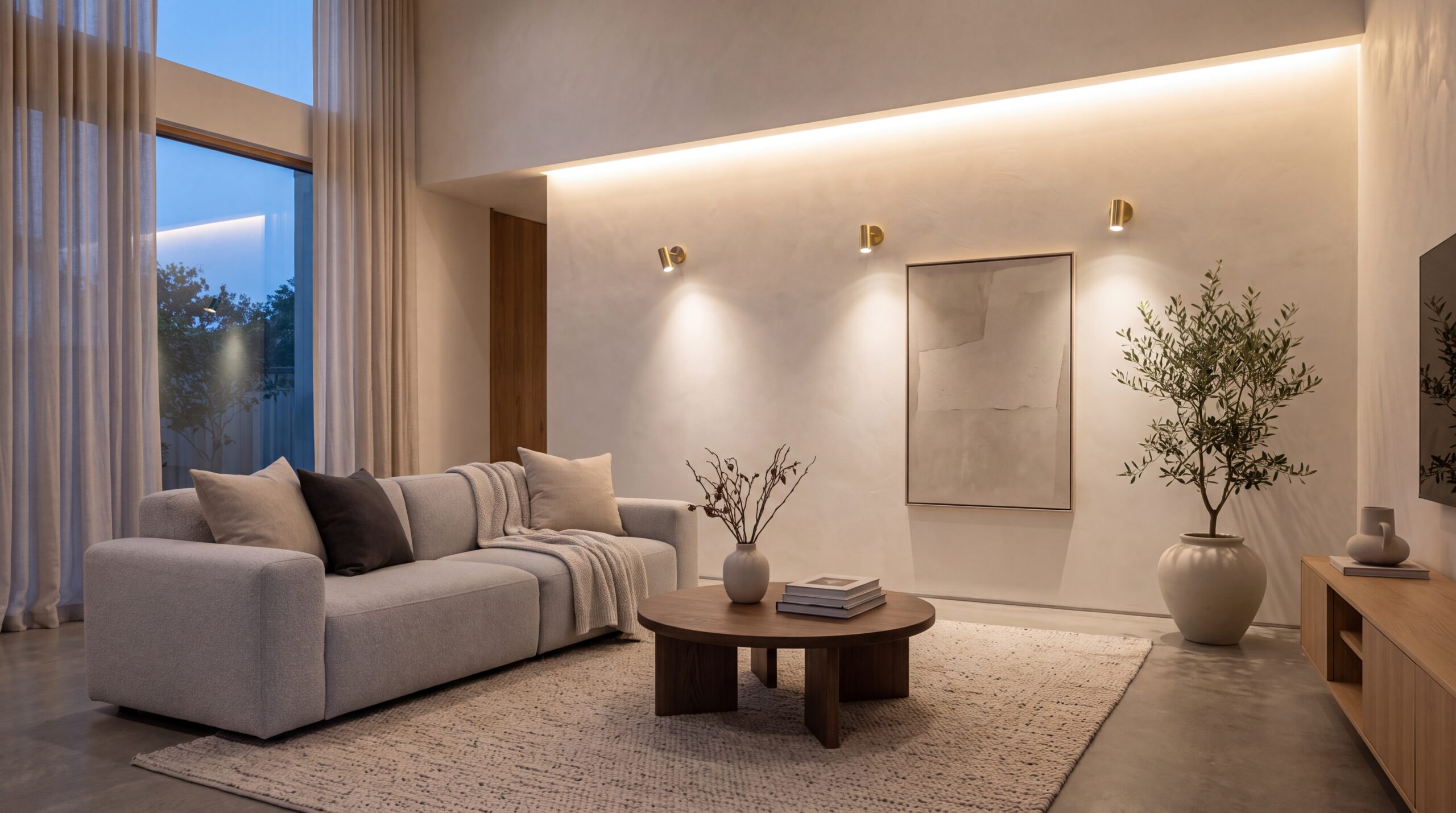
Architectural lighting is no longer merely about rudimentary illumination; it encompasses ambience, comfort, and seamless architectural integration. For modern premium properties, professional smart home lighting represents a fundamental design pillar. It fundamentally alters how we perceive internal spaces, shifting from static environments to dynamic, adaptive backdrops that respond intuitively to human presence and natural diurnal rhythms.
The Core Philosophy of Professional Lighting Design
To achieve a sophisticated aesthetic, design professionals employ a layered lighting methodology. This system comprises ambient, task, and accent lighting, orchestrated to work in perfect harmony. Traditional electrical layouts often result in unsightly ‘wall clutter’—banks of multiple switches that confuse occupants and detract from clean interior architecture. Implementing bespoke, centralized automated lighting solutions resolves this issue by consolidating complex circuits into elegant, programmable keypads that match the interior finish.
Selecting the Right Architecture and Infrastructure
At the specification stage, selecting the appropriate hardware is critical. Whilst consumer-grade wireless retrofits have their place, a professional-grade installation demands a robust, hardwired backbone. Systems such as Lutron offer unparalleled dimming performance, particularly with delicate LED fixtures that require precise low-end dimming curves without flicker. Designers and specifiers should consult a comprehensive specification guide for smart wiring devices to ensure total compatibility between control modules, LED drivers, and architectural fittings. For those planning projects in East Anglia, partnering with experienced automated lighting installers in Suffolk ensures these technical parameters are perfectly executed from the first fix.
Intelligent Automation and Scene Setting
True luxury lies in control systems that require minimal manual intervention. Rather than requiring users to manually adjust individual dimmers throughout the day, an advanced installation utilizes astronomical clocks, photometers, and discreet occupancy sensors. This involves transitioning from smart to truly intelligent automation, where the home proactively adjusts colour temperatures and intensity based on the time of day, enhancing the circadian health of its occupants. For example, a morning scene might transition from a warm amber hue to a crisp, energizing daylight temperature, whilst a late-night pathway scene activates low-level, glare-free floor washes.
System Resilience and Security
A professional smart home lighting installation must prioritize resilience and local control. Relying entirely on cloud-dependent architectures introduces unnecessary points of failure and latency. Designing systems that operate on local control networks ensures that your lighting, keypads, and sensors remain fully functional even during internet outages, maintaining both security and daily convenience. Integrating this level of resilience guarantees that the home remains safe, efficient, and beautifully lit under all conditions.