Smart homes are no longer a handful of gadgets; they are interconnected ecosystems that span networking, lighting, cinema, security, access control, voice assistants and more. These systems rely on stable connectivity, correct configurations and timely updates to behave as a single, cohesive environment. Relying on a break-fix approach—waiting for something to fail, then booking an engineer—creates unnecessary downtime, frustration and cost.
Proactive smart home monitoring applies professional, IT-style oversight to residential and mixed-use properties. Instead of reacting to faults, monitoring platforms continuously check device status, firmware, network health and performance thresholds. When anomalies appear, the system notifies your integrator, who can often resolve the issue remotely before you notice a problem. For homeowners, estate managers and operators of larger or more complex properties—including second homes with intermittent occupancy or sites with mission‑critical security and networking—this “always-on” posture delivers fewer outages, faster fixes and greater peace of mind.
At HYDE AV, we design and support bespoke, fully integrated systems across London, Essex, Suffolk and surrounding areas, leveraging trusted technologies from Crestron, Sonos, Nuvo and other leading brands. A proactive monitoring and service plan is how we safeguard that integration over time, ensuring your investment continues to perform day after day.
What a Modern Monitoring Plan Includes
A well-structured plan is transparent about coverage, response and deliverables. While tiers vary by property size and complexity, modern plans typically include:
- 24/7 remote monitoring and alerts: Continuous oversight of key devices (controllers, switches, access points, AV receivers, amplifiers, lighting processors, cameras, recorders) with automated alerts for offline status, high temperatures, storage issues, low batteries and more.
- Priority scheduling and support: Front-of-queue access for support requests and escalated response targets during peak periods.
- Remote diagnostics and remediation: Secure remote access to identify root causes and perform actions such as reboots, configuration corrections and firmware updates, reducing the need for on-site visits.
- Monthly health and performance reports: Clear summaries of uptime, incidents addressed, recommendations and upcoming maintenance, giving you measurable accountability.
- After-hours availability: Defined access to support outside standard business hours for critical issues.
- Waived callout fees for remote resolutions: If we can fix it remotely, the callout fee is waived; on-site visits are reserved for issues that truly require hands-on work.
Higher-tier plans add proactive labour and scheduled maintenance, such as:
- Bundled on-site hours for preventative work and minor changes.
- Scheduled firmware updates aligned with vendor release cycles.
- Battery checks for sensors, remotes and locks.
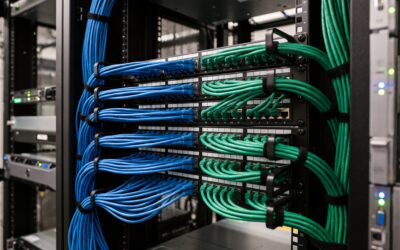
- Rack cleaning, airflow verification and UPS tests to improve longevity.
- Device calibration (for example, display and audio tuning in cinema rooms).
The tangible benefits are immediate:
- Fewer outages and ad hoc callouts, because small anomalies are repaired before they become failures.
- Faster resolutions through remote tools, often in minutes rather than days.
- Better performance, as updates and tuning maintain optimal configuration.
- Greater peace of mind, particularly for high-availability networking and security, where downtime has outsized consequences.
How Proactive Monitoring Works—and What It Watches
Proactive monitoring relies on lightweight software agents and secure network appliances that collect telemetry, track status and allow safe remote actions. The goal is not to capture content or private data, but to watch the operational parameters that determine reliability. Across a typical HYDE AV deployment, monitoring spans:
- Networking: Internet uptime, bandwidth saturation, packet loss, latency, access point coverage, client load and PoE budgets across switches. Alerts can trigger when WAN links flap, guest networks misbehave, or a switch port serving a critical device drops.
- Entertainment and cinema: Status of AV receivers, matrix switches, streamers and displays; HDMI/HDBaseT link health; CEC handshakes; heat and fan speeds in AV racks; storage capacity on media servers; firmware versions drifting out of support. Remote remediation includes cycling a misbehaving device, reseating routes, or pushing a stable firmware.
- Lighting and shading: Lighting processors online status, scene engine health, gateway connectivity for wireless keypads and blind controllers. Monitoring can flag a failed dimmer channel or a keypad that has gone offline before it disrupts a scene.
- Security and access: Camera and NVR uptime, motion and recording health, storage retention, door station availability, panel battery levels and sensor supervision. Proactive checks help preserve evidential video and ensure doors and alarms operate as intended.
- Voice control and control processors: Controller CPU and memory utilisation, queue backlogs in automation logic, and cloud skill connectivity to voice platforms to prevent sluggish or unresponsive control.
Typical remote actions include controlled reboots, configuration validation, rule updates and firmware patching during agreed windows. For issues requiring physical intervention—damaged cables, failed batteries, device replacement—priority on-site scheduling bridges the gap between remote and field service.
Privacy and data handling are integral. When evaluating any monitoring partner, ask:
- What telemetry is collected (device status, performance metrics, logs) and what is explicitly not collected (no audio/video content, no personal communications)?
- How is data secured in transit and at rest (encryption standards, access controls)?
- Who are the third-party processors, and where is data stored?
- How long is data retained, and can retention be tailored?
- How are user permissions and audit trails managed?
- How does the plan align with UK GDPR and your organisation’s compliance policies?
At HYDE AV, we operate with a data minimisation approach and clear consent, focusing on operational metrics needed to keep your systems reliable.
Evaluating Tiers, Pricing and ROI—Including Trial Options
Because homes and commercial spaces vary widely, the most dependable plans are tiered to match complexity, not just square footage. Consider the following when comparing proposals:
- Coverage and scope: Which systems are monitored? Are third-party or legacy devices included? How many endpoints are within scope?
- Service levels: Response times, escalation paths, after-hours provisions and what triggers on-site attendance.
- Remote access policy: Security posture for remote connections, including multi-factor authentication, per-session approvals and audit logs.
- Maintenance cadence: How often firmware is reviewed and updated, which vendors are covered, and how rollbacks are handled if an update introduces instability.
- Reporting: Clarity, frequency and the ability to translate technical metrics into outcomes you care about—uptime, performance and risk reduction.
- Inclusion of labour: Bundled hours for moves, adds and changes; scheduled site visits for rack care, battery swaps and calibration.
- Pricing transparency: Flat monthly fees per site or per device, discounts for multi-property portfolios, and any thresholds that change the tier.
If you are uncertain which tier you need, a time‑bounded trial with temporary monitoring hardware is a practical way to baseline your environment. Over four to eight weeks, the trial will surface connectivity bottlenecks, troublesome devices, thermal hotspots in the rack, and the cadence of alerts your system naturally generates. With real data, you can right-size the ongoing plan rather than over- or under-provisioning.
Return on investment is straightforward to quantify:
- Fewer emergency callouts: Remote diagnostics resolve many incidents without a van roll, eliminating callout fees and travel time.
- Less downtime: Preventing a switch failure or catching a filling NVR before it stops recording protects operations—and reputation in commercial settings.
- Extended equipment life: Heat management, clean power and timely firmware reduce stress on devices and avoid premature replacement.
- Efficiency gains for property teams: Estate managers and facility teams spend less time firefighting and more time on planned improvements.
Energy savings add another layer of value. With automation and monitoring working together, you can:
- Schedule lighting and AV equipment to power down outside occupied hours, with exceptions for security zones.
- Use occupancy, door and alarm states to drive HVAC setbacks automatically.
- Identify “orphan” devices drawing unnecessary standby power.
- Track network and device temperatures to improve airflow and reduce cooling loads.
The monthly health report becomes a useful management tool, highlighting trends, confirming that updates were completed and recommending opportunities to reduce energy use without compromising comfort or security.
A Practical Checklist for Homes and Commercial Spaces
Use this checklist to select the right proactive monitoring plan for your property:
- Define critical outcomes: What must never go down (internet failover, security recording, access control, lighting in circulation areas)?
- Map systems and vendors: List the controllers, switches, access points, lighting processors, AV endpoints and security devices you expect to be monitored—Crestron, Sonos, Nuvo and others included.
- Establish service expectations: Required response times, after-hours coverage and the threshold for on-site attendance.
- Verify security and privacy: Telemetry scope, encryption, access controls, GDPR compliance and data retention.
- Confirm remote capabilities: What can be fixed remotely today, and what will still require site visits?
- Align maintenance windows: Preferred times for updates and restarts to minimise disruption to residents or staff.
- Review reporting: Format, frequency and whether reports translate into actionable recommendations.
- Compare tiers and inclusions: Monitoring scope, bundled labour hours, scheduled maintenance and callout fee policies.
- Ask for a trial: Deploy temporary monitoring hardware to baseline your environment and validate the proposed tier.
- Clarify commercial terms: Fixed monthly costs, portfolio discounts, minimum terms and termination options.
For homeowners, estate teams and property managers across London, Essex, Suffolk and nearby areas, moving from break-fix to an always-on monitoring plan transforms the reliability, security and efficiency of modern living and working spaces. HYDE AV’s bespoke approach ensures your plan aligns with the way you live and operate—integrating networking, cinema, lighting and security into a single, proactively supported system that simply works.