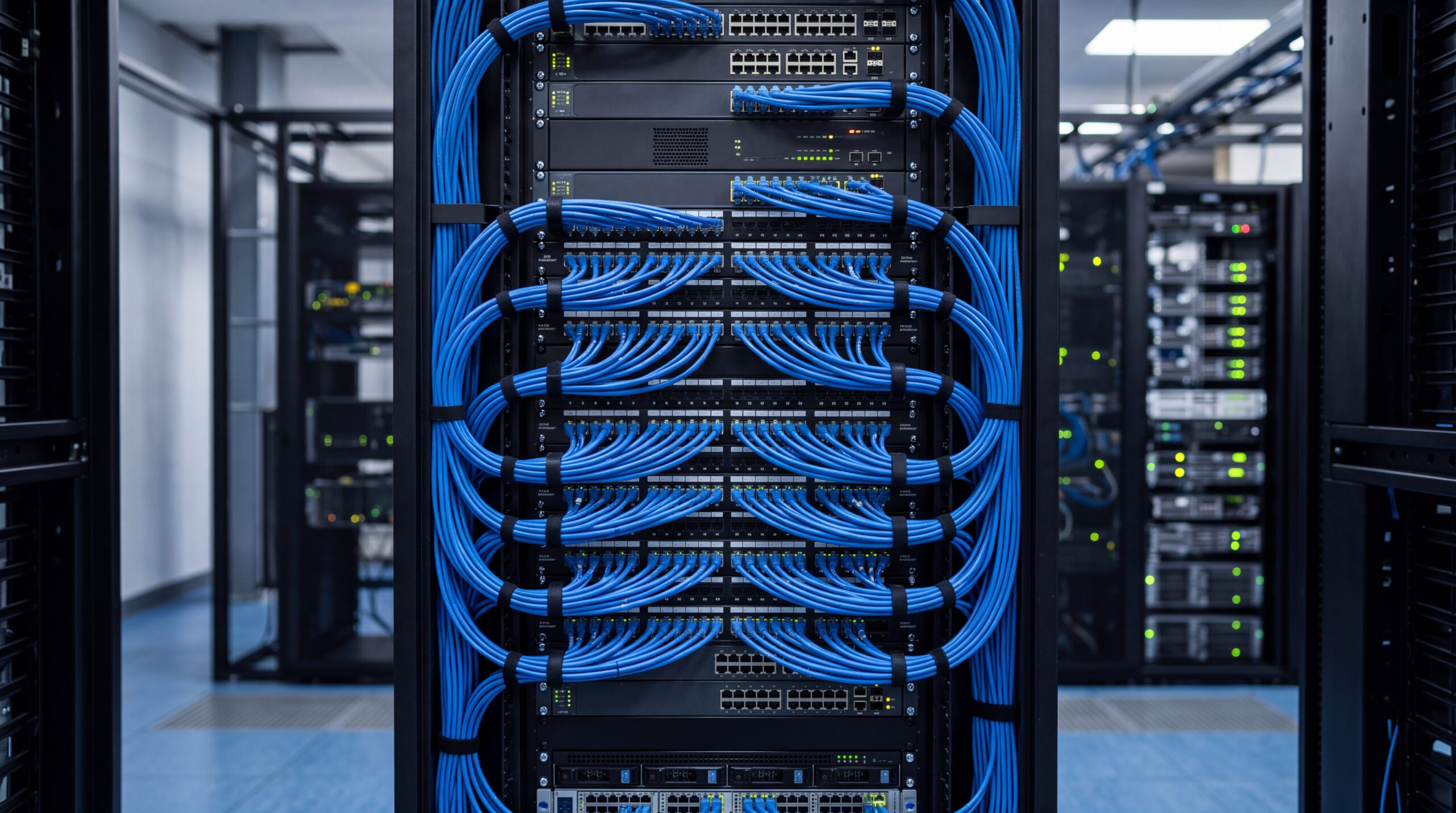
In modern corporate environments, a resilient IT and audio-visual ecosystem relies heavily on a meticulously planned infrastructure. Effective office network design is no longer merely an IT concern; it is a strategic asset that dictates operational productivity, communication quality, and enterprise security. As organisations integrate high-definition audio-visual systems, cloud architecture, and dense wireless arrays, the demand placed on physical and logical network components has escalated exponentially.
Establishing a Resilient Physical Infrastructure
The foundation of any robust network design is its physical cabling layer. While wireless technology provides operational mobility, high-bandwidth applications such as 4K video conferencing, central servers, and smart building controls require the stability and low latency of a hardwired backbone. Implementing high-specification copper cabling—such as Category 6A or Category 7—alongside strategic fibre-optic links ensures that data transmission bottlenecks are eliminated.
A well-architected cabling plant utilises a hierarchical structure, routing connections from main distribution frames (MDF) to intermediate distribution frames (IDF). Professional cabling management keeps patch panels, switches, and server racks organised, reducing downtime during maintenance and simplifying future expansions. Businesses embarking on office refurbishments across commercial hubs often rely on expert installers, whether seeking enterprise structured cabling in Docklands or tailored structured cabling solutions in Mayfair, to ensure full compliance with international standards.
Scalability and Redundant System Architecture
Future-proofing an office network requires anticipating future bandwidth demands and technological evolution. A scalable office network design incorporates modular hardware—such as stackable managed switches with Power over Ethernet (PoE+) capabilities—to power wireless access points, IP cameras, and AV equipment without cluttering desk spaces with dedicated power supplies.
Redundancy is equally vital for maintaining business continuity. Implementing link aggregation, redundant power supplies, and dual internet service provider (ISP) failovers ensures that hardware faults or external line disruptions do not cause costly operational downtime. A resilient network automatically reroutes traffic, keeping critical enterprise applications online without manual intervention.
Wireless Optimisation and VLAN Segmentation
Deploying an enterprise-grade wireless network involves far more than mounting access points at random intervals. Comprehensive radio frequency heatmapping must be conducted to assess wall densities, signal attenuation, and potential channel interference. This ensures seamless roaming across meeting rooms, open-plan workspaces, and executive suites without dropped connections during active VoIP or video calls.
Furthermore, logical network segmentation via Virtual Local Area Networks (VLANs) is critical for both security and traffic management. Segmenting network traffic into distinct zones isolates sensitive corporate data from guest Wi-Fi users and smart IoT devices. Key segmentation practices include:
- Corporate Data VLANs: Reserved exclusively for authenticated company assets and internal servers.
- Audio-Visual & VoIP VLANs: Prioritised using Quality of Service (QoS) protocols to eliminate latency and jitter during video conferences.
- Guest VLANs: Restricted networks offering isolated internet access for visitors, completely segregated from internal assets.
- Building Systems & IoT VLANs: Dedicated to environmental controls, IP surveillance, and access control hardware.
Enforcing Robust Network Security and Maintenance
A secure network design integrates multi-layered protection at every access point. Next-generation firewalls, intrusion detection systems, and Network Access Control policies ensure that only authorised devices gain admittance to the infrastructure. For organisations establishing prestigious headquarters or regional offices—such as those opting for high-performance structured cabling in Kensington or robust structured cabling installations in Windsor—professional installation ensures that physical security and cyber resilience are addressed simultaneously.
Ultimately, investing in modern, expert office network design guarantees high uptime, protects business data, and provides the scalable capacity required to support modern workplace technologies for years to come.